
No BMS on site? We become one.
Most buildings between 70 and 290 kW have no building management system at all. Noviterm gives them one — in software. The brain runs in the cloud; on site you need a gateway, the equipment’s own controllers and a few sensors.
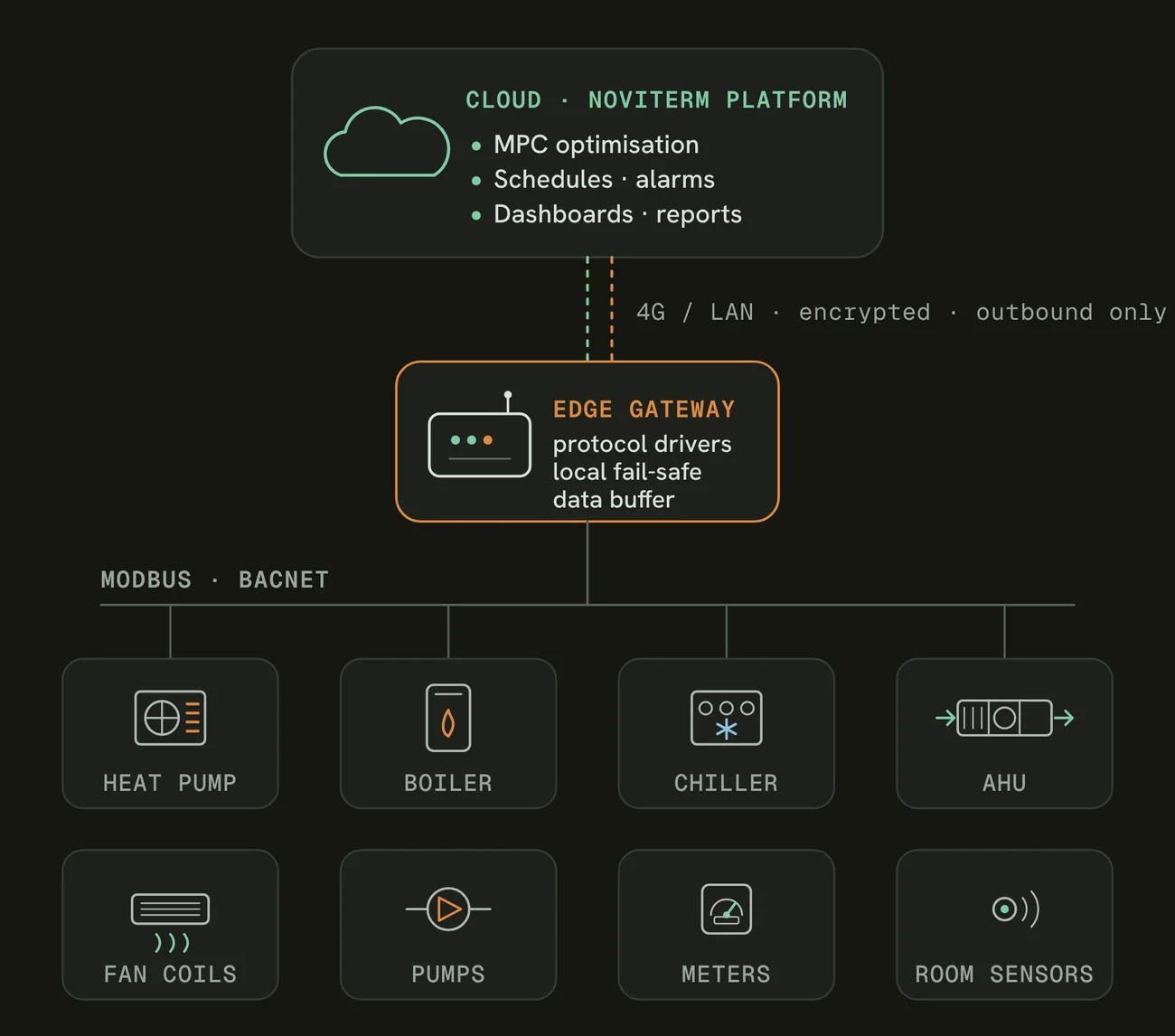
A fraction of the cost of a traditional BMS
No control cabinets and no software licences. The field hardware you already have — valves, sensors, equipment controllers — stays in place.
BMS functions plus AI optimization
Schedules, alarms, trends and reports, with predictive control on top: 12 hours ahead, re-planned every 15 minutes.
Installed by your installer in a day
Commissioning and tuning are done remotely. The gateway keeps safe limits even offline.
Everything a BMS does. Plus AI optimization.
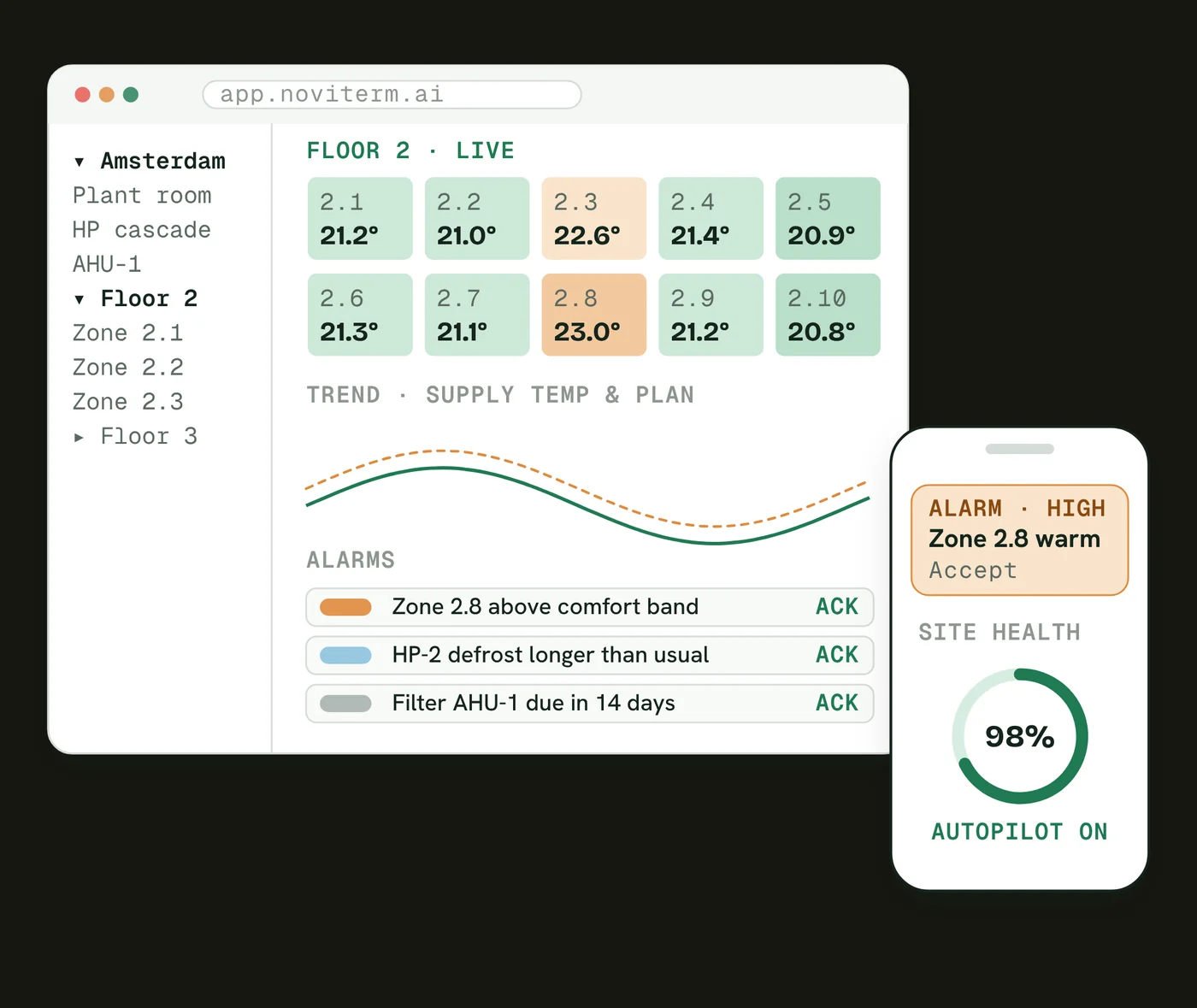
The toolkit a facility manager expects from a BMS — in one web platform that works on any screen.
- Schedules and calendars
- Setpoints and heating curves
- Alarms and notifications
- Trends and history
- Floor plans and live zones
- Manual override with a time limit
- Mobile access
- User roles and audit log
Rolling out with our first pilots
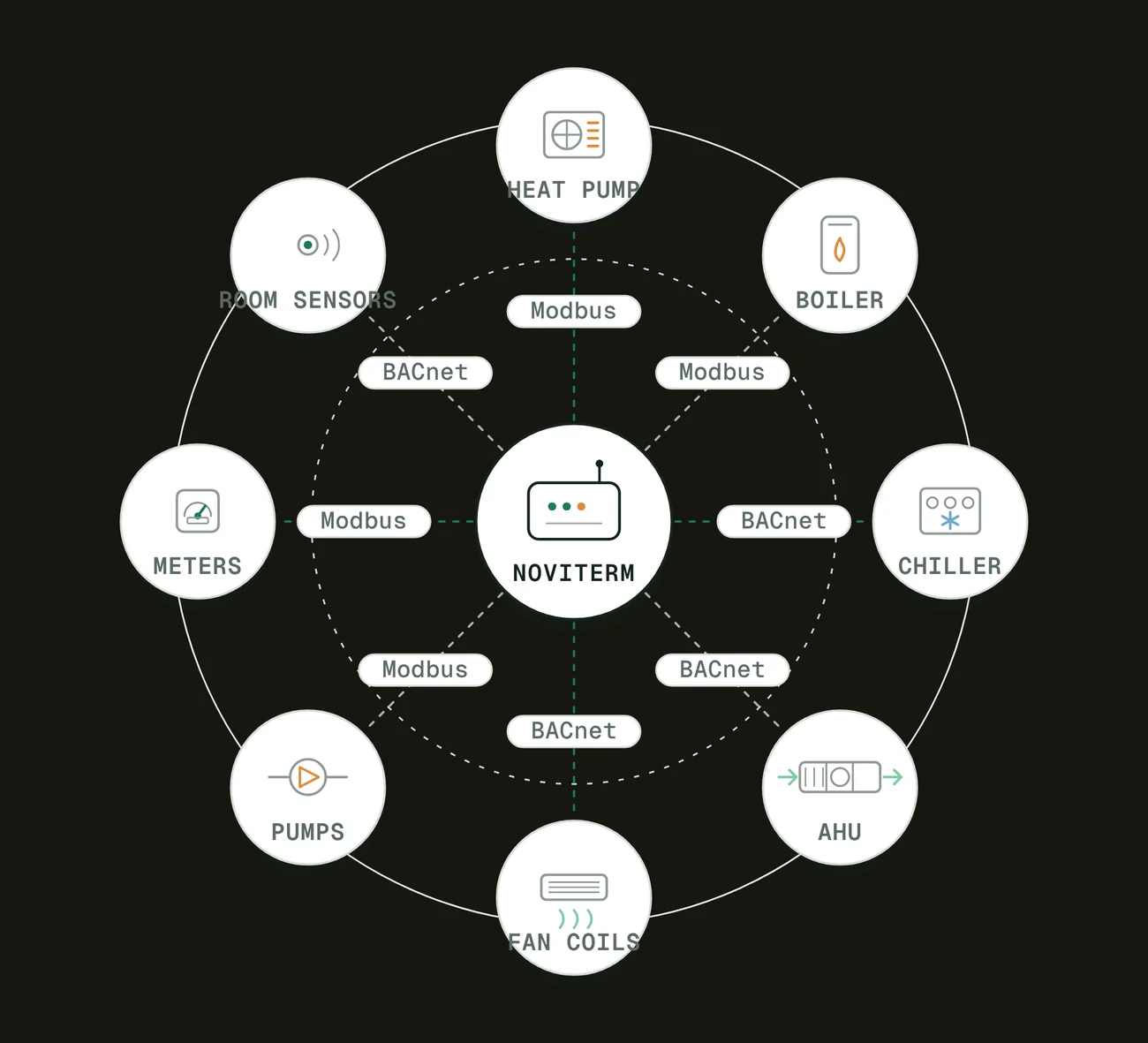
One gateway. Every unit in the plant room.
The gateway speaks Modbus and BACnet — the protocols already in the plant room — and coordinates mixed equipment as one system.
- Heat pumps, boilers and chillers
- Air handling units and fan coils
- Pumps, meters and room sensors
- Any brand: one layer over mixed equipment, with a growing driver library.
Goes live step by step
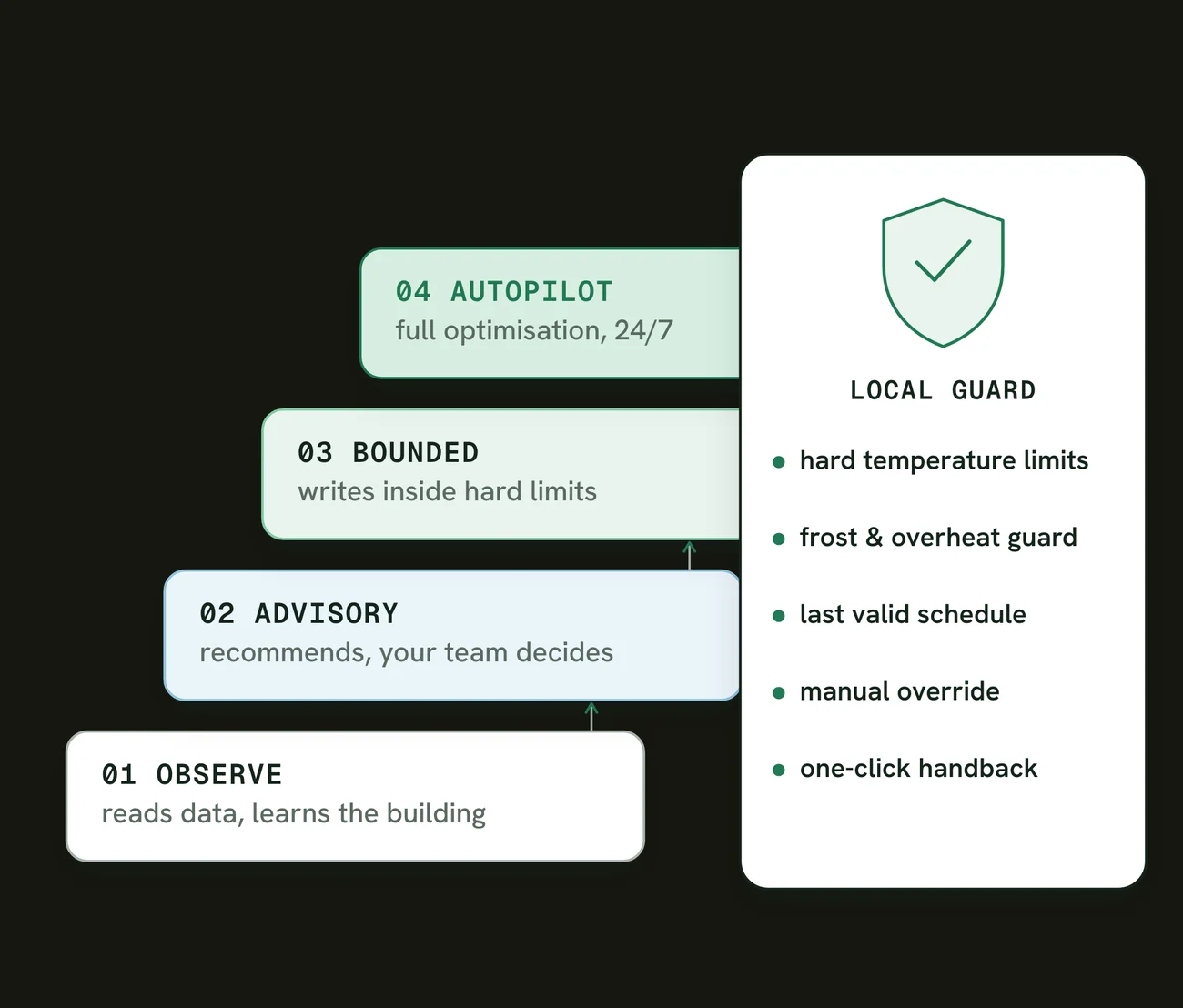
From watching to full autopilot. Hard limits are enforced on site by the gateway itself, whatever happens to the connection.
- Observe: reads data and learns the building.
- Advisory: recommends; your team decides.
- Bounded: writes setpoints inside hard limits.
- Autopilot: full optimization, 24/7.
- Local guard: temperature limits, frost and overheat protection, the last valid schedule and manual override keep running offline.
- One click back: control returns to the equipment’s own controllers.
Ready for the 70 kW rule
Under the EU Energy Performance of Buildings Directive, building automation and control becomes mandatory for non-residential buildings with heating or cooling systems over 70 kW by the end of 2029. Virtual BMS helps you meet these requirements for heating, cooling and ventilation — with monitoring, benchmarking and detection of efficiency losses.
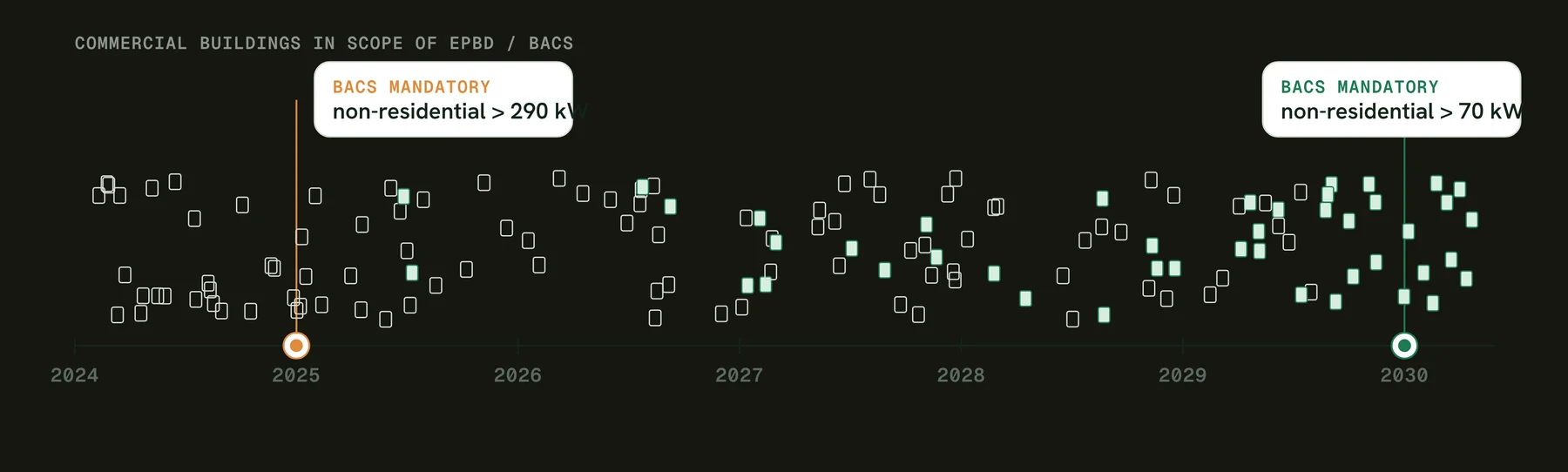
building automation already mandatory
mandatory from the end of 2029
the efficiency class a building without automation can move to with predictive control (EN ISO 52120)
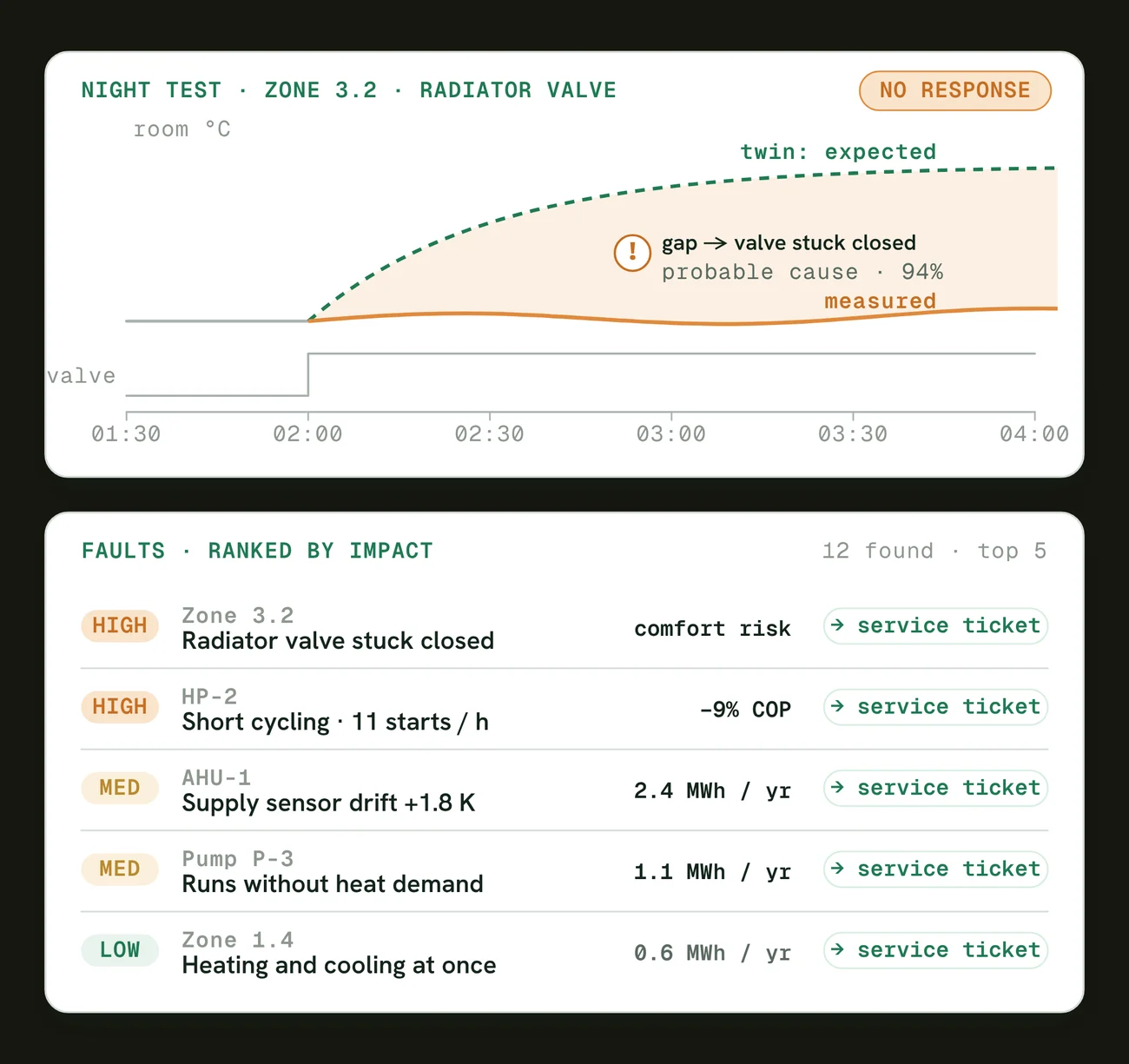
Faults found before anyone calls
Module in developmentThe twin knows how every zone and unit should respond. Stuck valves, drifting sensors and short-cycling compressors are flagged and ranked by impact, with a service ticket for the installer.
From first call to autopilot in weeks
Your installer fits the gateway in a day, with no heating downtime. Point mapping, modelling and tuning are done remotely.
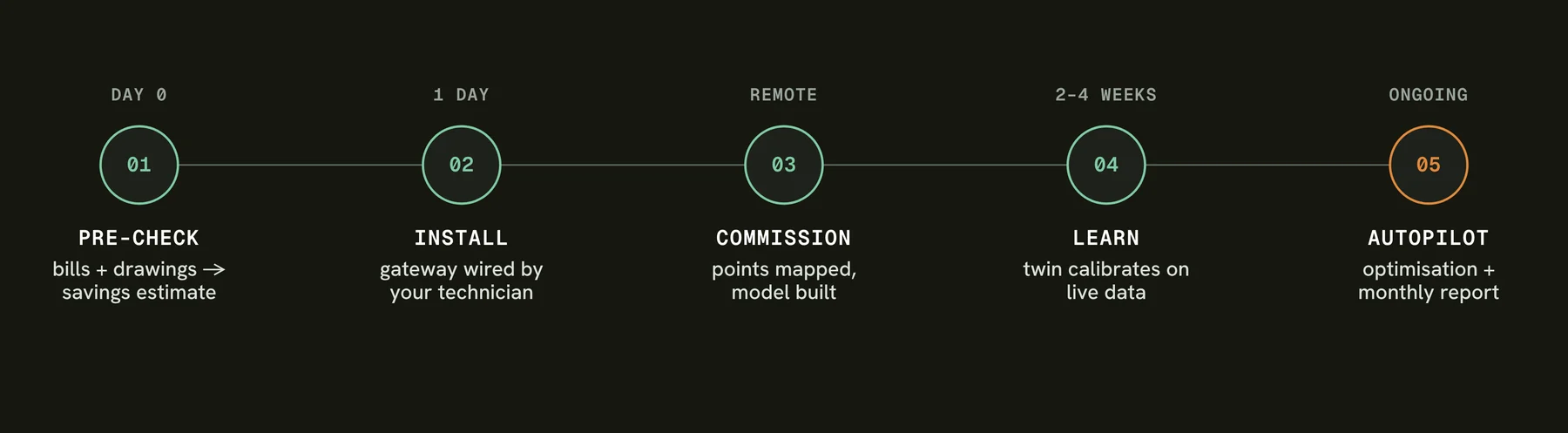
savings estimate from bills and drawings, before any cable is pulled
on site for the installer
heating downtime during installation
to full autopilot
Buildings with a central plant and no BMS
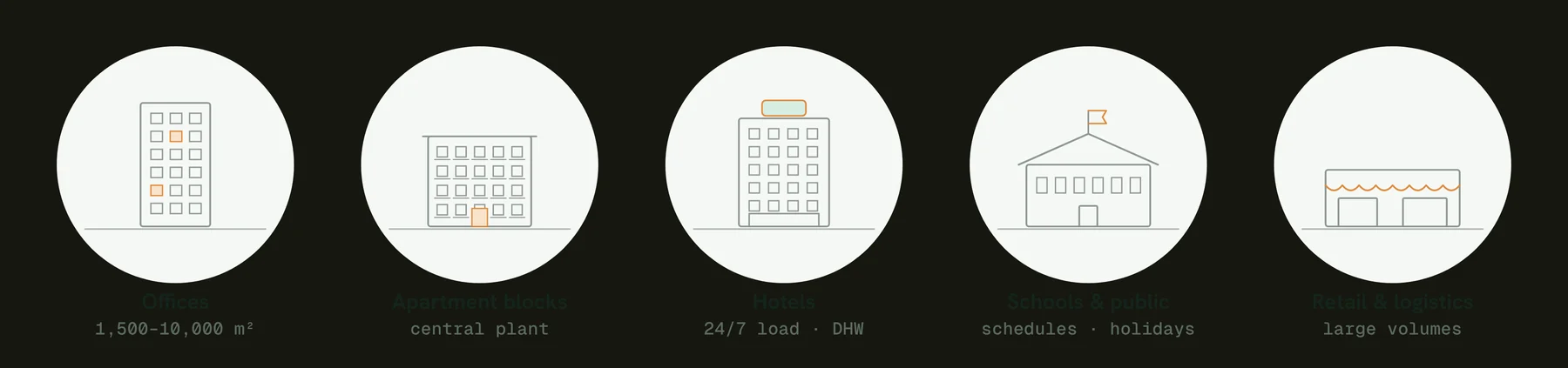
heated or cooled area
heating or cooling capacity
heat pumps, boilers, chillers, air handling units
no BMS — or an existing BMS we make smarter
How much could your building save?
Tell us the building type, floor area and heating or cooling system. We reply within one business day; your estimate follows once we have the building data — free, no commitment.
- Reply within one business day
- Estimate from your bills and drawings — no site visit needed to start
- No commitment
Prefer email? [email protected]